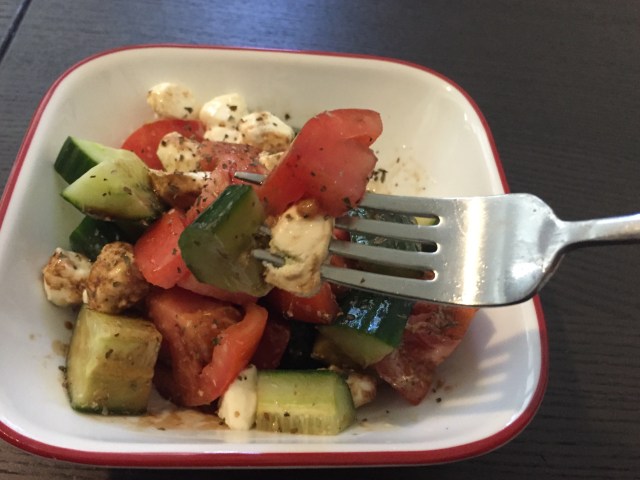
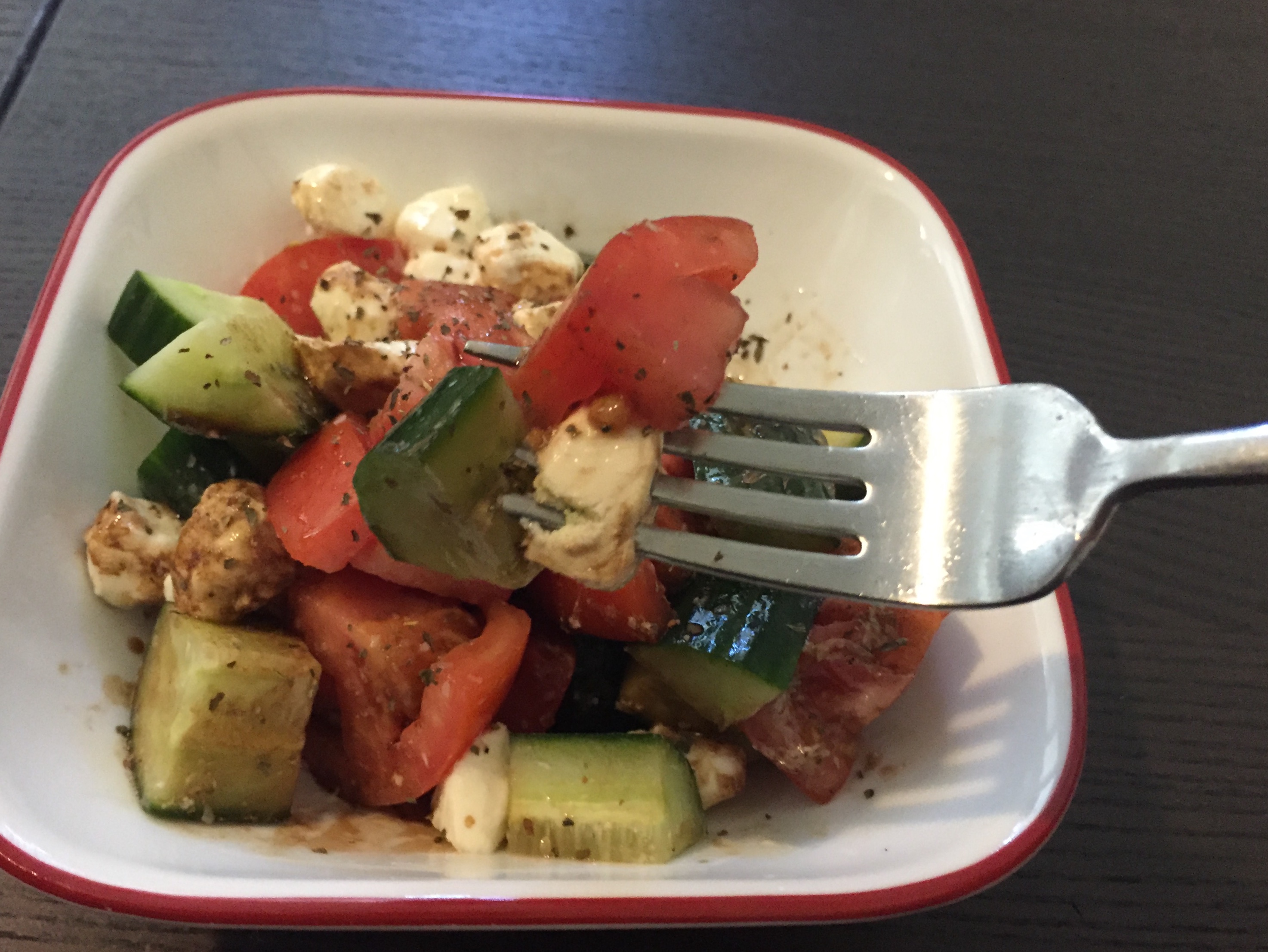
This my take on a fast Caprese salad. I used tomatoes, cucumbers, dried basil because I forgot to get fresh basil at the store, and mozzarella pearls. For the dressing I used balsamic vinegar and a garlic olive oil, seasoned with salt and pepper to taste.
This is quick, easy, healthy, and most importantly delicious.
Recipe:
Tomatoes diced
cucumber diced
pearl mozzarella
balsamic
garlic infused olive oil you can sub regular olive oil
basil fresh preferably or dried
salt and pepper to taste
Directions:
Chop veggies to bite size
Toss veggies and mozzarella
in a separate bowl lightly mix oil, salt, pepper, and basil. Drizzle with dressing and enjoy
Stats:
Calories 253, Fat 17.7 g, Fiber 3.7 g, Carbs 11.6 g, Sodium 146 mg, Protein 17.1 g
Thanks for reading this far. Let me know what you think if you get to try this.
Alright… diets and dieting are a sensitive subject for most
people. I have done my share of dieting, yo-yoing up and down. Trying out each
new fad. I even tried that grapefruit diet. Do you remember that one? Maybe I am
just showing my age. If you want to read
more about it. You can find it on Web MD.
I know some of my friends have done keto and have gotten such
great results. Other friends have gone paleo, and had some great results. If
you have something that works for you I say keep doing it. However, if you feel
like your diet is not sustainable than maybe look into what makes your body feel
good.
I prefer to try to eat whole foods now. The emphasis is on
whole minimally processed foods. For instance if you look at the ingredients in
a package of chips and there are more than 3 ingredients and many that you
cannot pronounce that is something to avoid. Cooked or raw your body processes
those whole food nutrients much more efficiently than it does those foods processed
with chemicals.
Nutrigenomics
There is some interesting research going around nutrigenomics.
The New York Times has a great article about it. Where scientists and doctors
are approaching peoples diseases based on genetics and what they eat.
“There is a buzz around nutritional genomics at the moment, which is partly a matter of timing. A sea change is under way in the approach scientists are taking to disease — they’re looking less to nature or nurture alone for answers, and more to the interactive symphony of ”systems biology” that nutrigenomics epitomizes.
At the same time, chatter around this new science has been amplified by a controversy. The idea of the biological relevance of race — even its very existence — is hotly debated. And the assumption of real genetic markers that distinguish one ethnic group from another is at the philosophical heart of nutrigenomics.
At the same time, chatter around this new science has been amplified by a controversy. The idea of the biological relevance of race — even its very existence — is hotly debated. And the assumption of real genetic markers that distinguish one ethnic group from another is at the philosophical heart of nutrigenomics.
Here’s the most familiar example: If you’re of Northern European ancestry, you can probably digest milk, and if you’re Southeast Asian, you probably can’t. In most mammals, the gene for lactose tolerance switches off once an animal matures beyond the weaning years. Humans shared that fate as well — until a mutation in the DNA of an isolated population of Northern Europeans around 10,000 years ago introduced an adaptive tolerance for nutrient-rich milk. The likelihood that you tolerate milk depends on the degree to which you have Northern European blood.
”That, essentially, is the model — a very dramatic one,” says Jim Kaput, the founder of NutraGenomics, a biotechnology company. ”As humans evolved, and as our bodies interacted with foods on each of the continents, we sort of self-selected for these naturally occurring variants. And certain populations have variants that, when presented with Western-type food — which is usually fatty and overprocessed and high in calories — pushes them toward disease rather than health.”
I have noticed based on just experimentation, my body does better with more plant based foods, less animal proteins with emphasis on fish and seafood, and avoiding lots of dairy. I am half Japanese and I am lactose intolerant. I still like pizza though!
Eat Whole Foods, Don’t Starve Yourself
I strive… to eat using only whole foods, but I still allow myself to enjoy life. Do I eat things that are not whole foods. Yes! Do I do it all the time? Nope! During the holidays you should let yourself have fun. What is life without celebration? Eat whole foods, don’t starve yourself.
I am the kind of person that can be strict enough with myself to limit myself to 500 calories a day. Please don’t do this. It is not healthy and really messed up my metabolism for a long time. It messes with your hormones and many other body processes. I can tell you it feels painfully boring. It is going to a party and saying nah I can’t even take a bite of anything because I had my apple, boiled egg and saltines I have already allotted for this meal. Its feeling left out. Its the constant guilt about food. When I feel guilty about food, I know I began to resent food. However, if you snack, and eat everyday with health in mind. You can indulge occasionally. It is good for the soul and good for your spirits.
With that said I will stop rambling and get on with the healthy snacks. Eat these nummy things on a normal day and feel like you are treating yourself. Then when a special celebration comes around let loose and have fun.
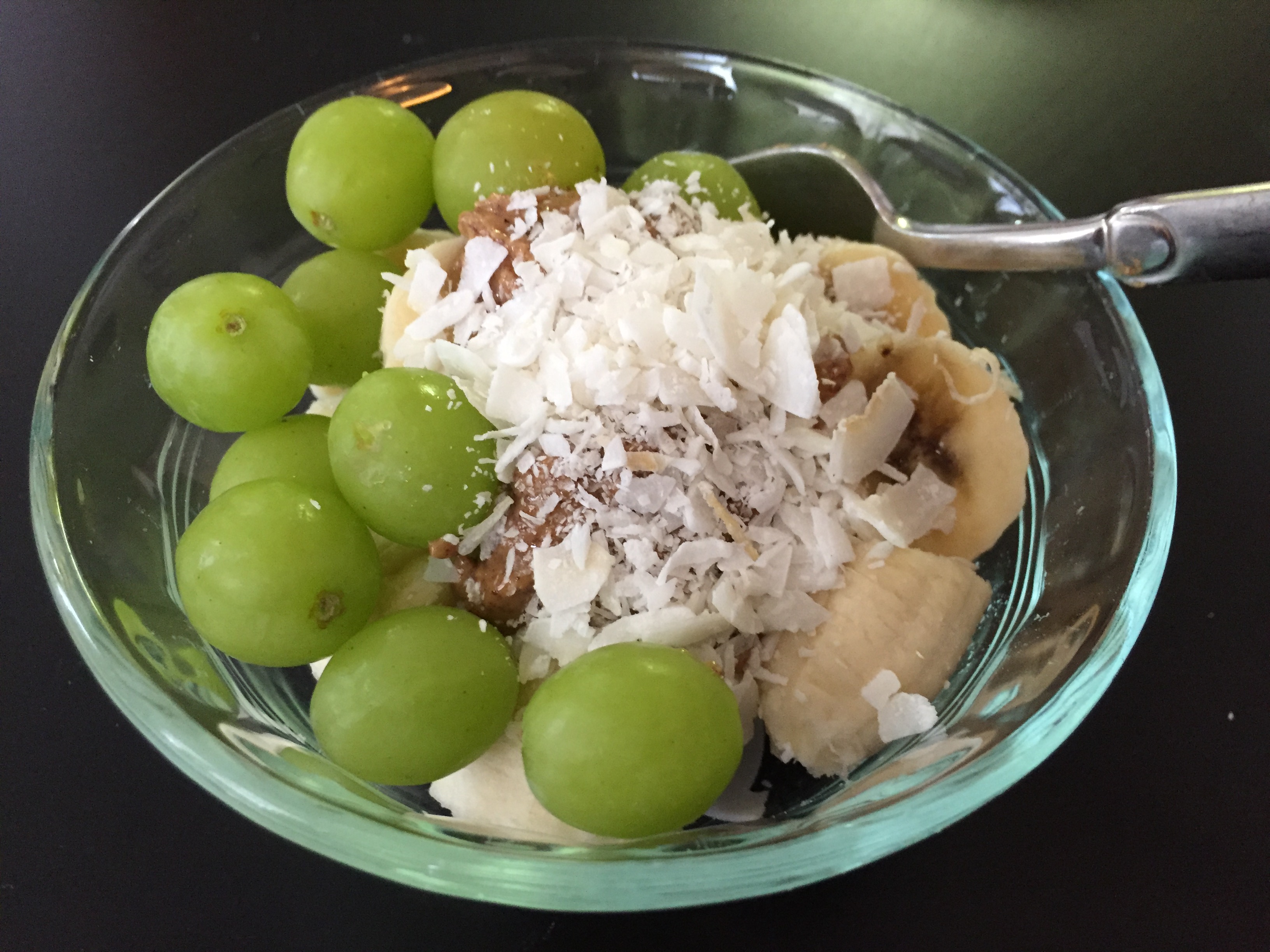
Banana Almond butter and Grape
Yeild: 1 bowl
Ingredients:
1 banana sliced
2 tsp of almond butter
10 grapes
1 tsp of desiccated unsweetened coconut
Directions:
Slice bananas, and place all ingredients in a bowl and enjoy.
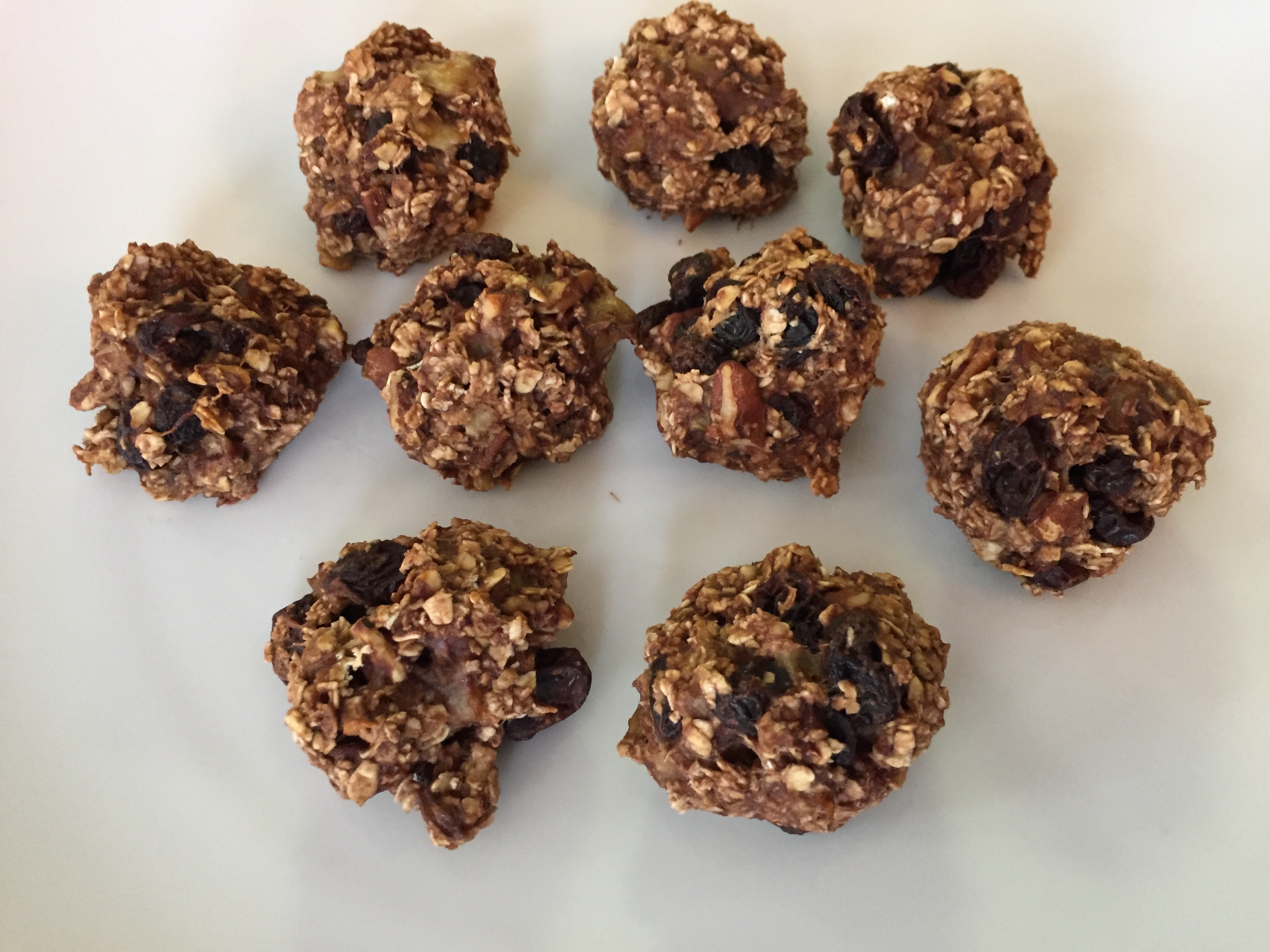
Smash the bananas, mix in the oats, and then rest of the ingredients. Roll the mixture into a ball and then place on a greased parchment paper lined pan. Bake for 15 minutes.

 Thinks with Spinks